

Over time, hot tub water accumulates minerals, chemicals, and residue that can make it cloudy or foamy, create unpleasant odors, and make it harder to balance.
Draining and refilling is a key part of routine maintenance—and often the quickest reset when spa water won’t balance or clear up.
This guide keeps the process safe, quick, and straightforward, covering everything from shutting down the spa to restoring your water to a clean, comfortable state.
When Should You Drain a Hot Tub?
Knowing when to drain your hot tub is key to maintaining a healthy and inviting spa. Most hot tubs using chlorine or bromine should be drained and refilled about every 3–4 months. If you have a saltwater system, water can often last up to a year.
However, the ideal frequency depends on your usage patterns and water conditions. Drain sooner if you notice cloudy water, persistent odors, foam that does not resolve with anti-foam products, visible scale buildup along the waterline, frequent sanitizer demand, or skin irritation after soaking.
Always consult your manufacturer’s guidance for your specific hot tub model, as some systems have unique requirements.
Safety and Prep Before Draining
Before you drain your hot tub, take a minute to set up safely so the process stays quick and damage-free. Turn off power at the circuit breaker to prevent pumps or heaters from running dry. Keep cords, plugs, and connections well away from water.
If the water is very hot, let it cool to a safer temperature before handling hoses and equipment. Finally, check your local disposal rules to determine where the drained water can be disposed of.
Tools and Supplies You May Need
Have your essentials ready: a garden hose for basic draining, or a submersible pump for fast emptying. A wet/dry vacuum helps remove leftover water from the footwell, seats, and low spots after draining.
Keep towels or sponges on hand, along with a mild, non-abrasive cleaner, for quick wipe-downs. Wear gloves and eye protection for safety. For a convenient draining option, consider the QuickDrain Hand Held Drain.
Where to Send the Water
Drain-water disposal rules vary by location, so follow your local ordinances before you start. Many areas prohibit discharging chemically treated hot tub water into storm drains or onto lawns and landscaping, as it can enter waterways or damage plants.
Where permitted, the safest option is usually directing water to an appropriate sanitary sewer connection or cleanout. If you are unsure, contact your local utility or municipality for the correct disposal method.
The 3 Main Ways to Drain a Hot Tub
You have three primary methods to choose from: the built-in drain spigot, a submersible pump, or a wet/dry vacuum. Each has distinct advantages depending on your hot tub model, available equipment, and desired speed.
Method 1 — Use the Built-in Drain Spigot
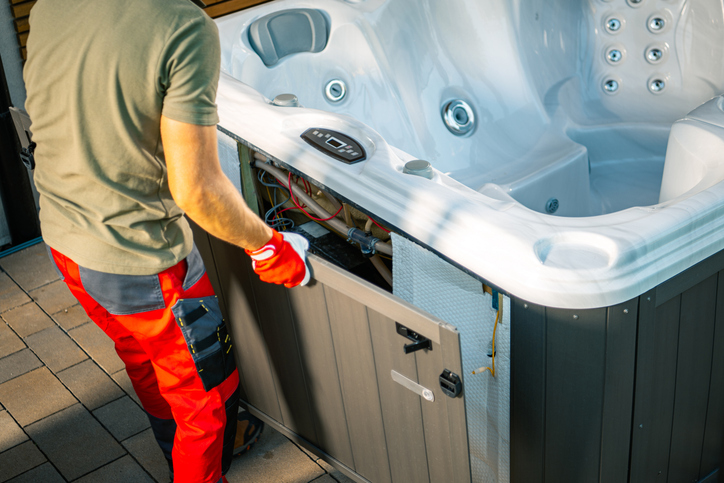
The drain spigot is usually located near the bottom of the hot tub’s exterior, often behind an access panel. Once you find it, screw a garden hose onto the drain valve and tighten it securely to prevent leaks.
Run the hose to a safe drainage area and keep the outlet end below the tub so water flows steadily. Open the drain valve to begin emptying the spa; depending on your model and hose length, this method often takes about 45–90 minutes (sometimes longer).
Some hot tubs include a secondary drain point or service fitting—check your owner’s manual (or inside the access panel) to see what your model supports.
After draining, remove any remaining puddles with a wet/dry vacuum or a sponge so the tub is fully empty.
Method 2 — Use a Submersible Pump
A submersible pump is the fastest way to drain a hot tub, often reducing drain time to around 10–15 minutes for many residential spas, depending on the pump and hose size. It works by sitting directly in the water and pushing it out through an outflow hose.
Place the pump in the deepest part of the tub so it can remove as much water as possible, then attach an outflow hose and route it to your approved drainage area. If you need extra reach, connect a standard garden hose as an extension.
As the water level drops, monitor the pump and reposition it to capture any low spots or residual puddles. Most importantly, do not let the pump run dry—once it starts pulling air, shut it off to prevent overheating and damage.
Method 3 — Use a Wet/Dry Vacuum
A wet/dry vacuum is a helpful middle-ground option: it is often faster than relying on the drain spigot alone, and it can pull water from hard-to-reach areas.
Set the vacuum to the wet setting, place the nozzle in the water, and turn it on to start filling the canister. Stop periodically to empty the tank as needed.
This method is especially useful for the footwell and other low spots where water tends to pool after the main drain has finished. It can also help remove lingering water around jets and in tight corners, leaving the tub as empty as possible and ready for cleaning.
How to Deal With Leftover Water After Draining
After the main drain is finished, take a few minutes to remove any leftover water so moisture does not linger in low spots. Use towels or a large sponge to soak up small puddles, and a bucket or scoop for any remaining pockets of water.
For the most thorough finish, a wet/dry vacuum can pull water from the footwell, seats, and tight crevices where it tends to collect. Once the shell is as dry as possible, you are ready to move on to cleaning.
What to Do While the Tub Is Empty
Draining is not only about removing old water—it is the best time to clean the spa thoroughly and inspect key parts while everything is easy to see and reach.
Clean the Shell
Clean the shell with a mild, non-abrasive cleaner made for hot tubs, focusing on the waterline where oils and residue collect. For a light mineral film, a gentle vinegar-and-water solution can help, but avoid harsh household cleaners, which can damage surfaces.
Scrub with a soft cloth or non-scratch brush, then rinse thoroughly to remove any cleaner residue. Remove rinse water with a sponge or wet/dry vacuum, so leftover product does not foam after refilling.
Clean or Replace the Filter
Remove the filter and rinse it well with a garden hose, spraying between pleats to flush out trapped debris. For a deeper clean, soak it in a filter-cleaning solution, then rinse again until the water runs clear.
Thorough rinsing is important because leftover cleaning products can re-enter the tub at startup, causing foaming or water balance issues. If you want to refill and restart sooner, keeping a spare clean filter is a simple time-saver.
Inspect Components
While the tub is empty, check areas that are hard to evaluate when the spa is full. Look for worn seals and gaskets, cracked or loose jets, and any corrosion or scale buildup around fittings or any accessible heater/plumbing connections.
Pay attention to staining, mineral trails, or damp spots that suggest a slow leak. Catching these issues now helps prevent them from escalating into a problem that could worsen under heat and water pressure.
Optional Deep-Clean
If you deal with biofilm, odour, or recurring cloudy water, an optional deep-clean can be worth the extra effort.
Follow the directions on your chosen purge or plumbing-cleaning product carefully, then drain completely and rinse thoroughly afterward so loosened residue does not remain in the system.
While the tub is empty, tools like a hot tub vacuum, hot tub brush, and spa skimmer can help remove debris and scrub buildup before you refill.
How to Refill Your Hot Tub the Right Way
Refilling goes smoothly when you keep the power off, close the drains securely, fill to the proper level, then restore power and circulate.
Reduce Air Locks by Filling Through the Filter Area
On many hot tubs, routing the hose into the filter compartment (or filter well) can help expel trapped air from the circulation plumbing as the tub fills.
Instead of filling from the middle of the shell, let the water feed the system through the filter area first, which reduces the risk of an airlock limiting flow at startup.
This approach is model-dependent, but it is a common, low-effort step that can prevent frustrating priming issues.
Water Quality Considerations
If your fill water is hard (high in calcium and magnesium), a hose pre-filter can help reduce sediment and some minerals that contribute to scaling and make balancing more difficult.
It will not “fix” water quality on its own, but it can reduce what you add at refill, which often makes startup chemistry more manageable. Plan to test early after filling, especially if your water tends to run high in calcium or contains metals.
Restart and Rebalance Water Chemistry
Once the tub is full, restore power and circulate the water, then test and balance in stages rather than adding everything at once.
Follow your hot tub manual or manufacturer’s recommended startup order, since many systems stabilize best when alkalinity is adjusted before pH and sanitizer.
Give the water time to circulate between additions, then retest and fine-tune until readings hold steady before soaking.
Common Draining Mistakes to Avoid
A few small mistakes can turn a routine drain-and-refill into equipment damage, a cleanup mess, or a disposal issue.
- Power: Forgetting to shut off the breaker can let pumps or the heater run without water, risking severe damage.
- Disposal: Discharging into a storm drain or onto landscaped areas where it is restricted can harm the environment and violate local regulations.
- Pump: Letting a submersible pump run dry can cause overheating and shorten the pump’s lifespan.
- Overflow: Refilling and walking away can cause flooding around the spa and water seeping where it should not.
Key Takeaways on How to Drain a Hot Tub
Switch off power at the breaker, drain, and dispose of water per local rules. Clean the shell and filter, refill through the filter well to reduce airlocks, then rebalance chemistry.
Remove the hot tub cover, keep it away from puddles and chemicals, and wipe it down as needed. If it feels heavy or failing, see our premium spa cover and accessories.
Frequently Asked Questions (FAQs)
How Do You Clean a Hot Tub Without Draining It?
Maintain cleanliness without draining by regularly testing and balancing water chemistry, cleaning the filter weekly, and using a skimmer for floating debris. Wipe the waterline regularly and use a spa vacuum to keep the floor clean between drains.
What Is the Fastest Way to Clean a Hot Tub?
A submersible pump is one of the fastest ways to drain (often ~10–15 minutes, depending on pump and hose size). A quick shell wipe-down, rinse, and refill can usually get you back up and running in a few hours.
Is It OK to Leave Your Hot Tub Empty?
Short-term emptying for repairs or deep cleaning is fine. However, extended empty periods can increase the risk of seals and gaskets drying out, which may lead to leaks when you refill. For long-term downtime, follow your manufacturer’s winterizing/storage instructions.